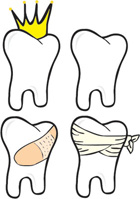



 Unfortunately, dental emergencies are fairly common, so it’s advisable to learn how to act in an emergency situation.
Examples of dental emergencies
Examples of dental emergencies include broken teeth, avulsed teeth (teeth that have been knocked out), jaw injuries and severe dental pain.
If you are involved in an accident and you lose a tooth or your tooth is badly broken, it is advisable to contact your dentist as quickly as possible. In some cases, if you can get to the practice very quickly, it may be possible to save an avulsed tooth. If you have lost a tooth, try to wipe it clean while holding it by the crown at all times and then place it between your gum and the inside of your cheek or in a glass of milk.
If you have a broken tooth, you may need urgent treatment to repair it and prevent any further damage. When you see your dentist, it is likely that they will order an X-ray to determine the extent of the damage and identify the best course of action.
Dental pain can be very severe and it may come on very suddenly. If you have serious dental pain, contact your dentist. It may be that you have an infection or an abscess that requires treatment. If you have bearable yet persistent toothache, arrange to see your dentist as dental pain usually indicates an underlying issue, such as a cavity.
Emergency appointments
We always try to cater for patients with dental emergencies as quickly as possible. If you need urgent treatment, contact the practice and we will do everything we can to see you and treat the problem swiftly. If you suffer a jaw injury, such as a fractured jaw, you will need medical attention, so visit your local Accident and Emergency department.